
How to build identity, content, and visibility for a new gravel event in a crowded calendar.
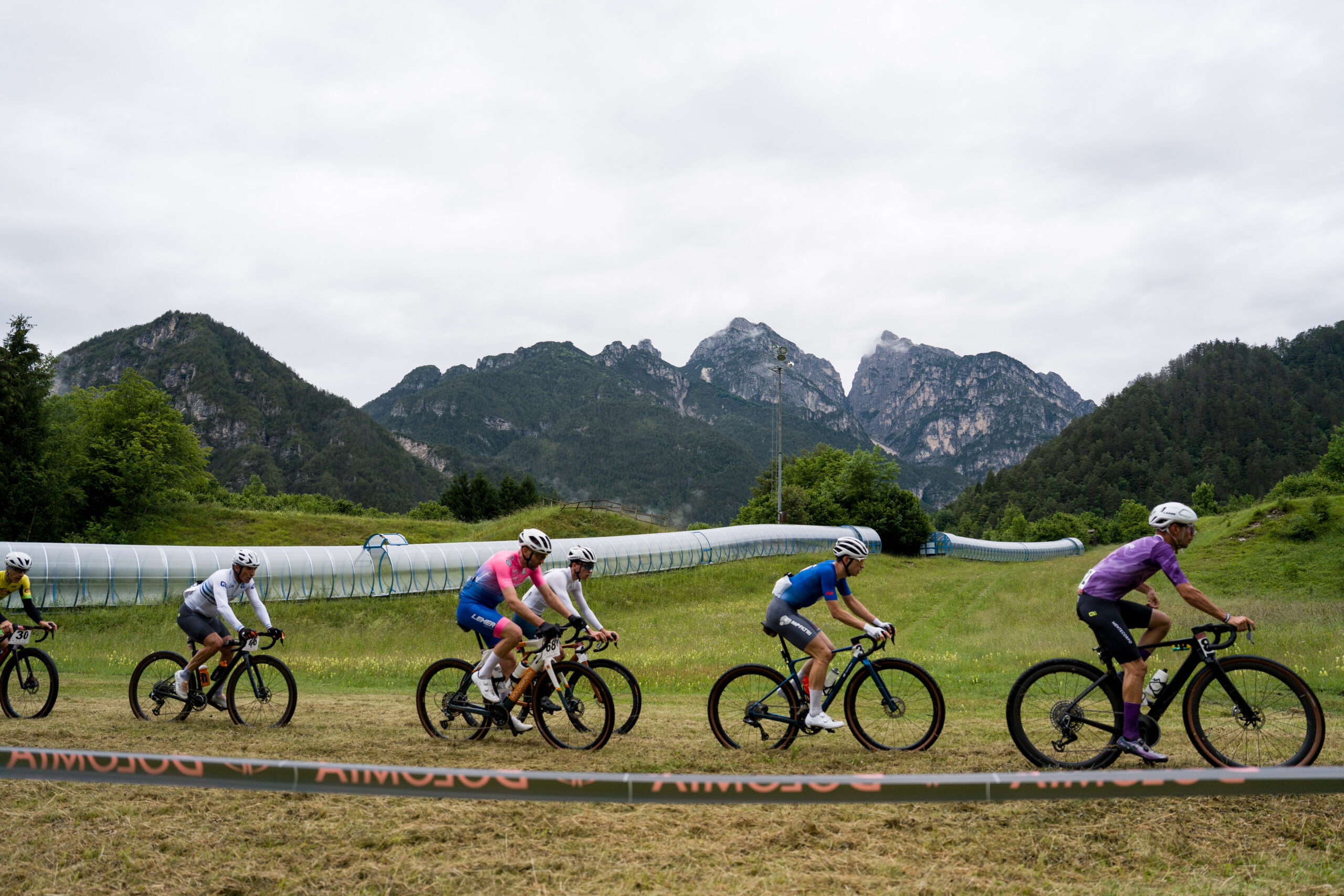
When we joined the ‘River&Peaks powered by Dolomia project’ at the end of January 2026, the event existed mainly as an idea. A compelling idea: bringing a gravel race and a non-competitive ride to the heart of the Friulian Dolomites, connecting the villages of Claut, Cimolais, and the Valcellina Valley.
Communicating a first edition means starting from scratch. We had just over three months to transform a project on paper into something recognisable. The real challenge was not the event itself. One of the most common mistakes that is often made when promoting a first edition is trying to compete with events that have existed for years. River&Peaks could not win that battle. It did not have a decade-long history. It did not have thousands of photos or an established community. Most importantly, it did not have stories to tell…yet. That is why we chose to change perspective.
Rather than focusing solely on the event, we decided to tell the story of the place.
When the territory becomes the main character
The Friulian Dolomites represented a significant advantage: an authentic destination, still relatively unknown to the national gravel audience, yet perfectly suited for cycling.
Instead of centering the communication exclusively around the race, we built a narrative designed to spark curiosity by focusing on:
- The landscapes
- The outdoor culture
- The routes
- The discovery of the territory
- The overall weekend experience
We could not say “Come because this race is famous”, we chose to say, “Come and discover a place you have probably never ridden before.”
Building content almost from scratch
One of the most complex aspects of the project was working with very limited material. For this reason, much of the initial communication relied heavily on graphic content, press releases, and partner storytelling, while dedicated photographic content was gradually developed to support an editorial plan that evolved alongside the project itself.
We were fully aware that the perfect communication plan does not exist. Whilst we had a clear narrative framework on paper, reality required constant adjustments. With weather conditions being as uncertain as they were right up until the final days before the event, available content was limited, and photo shoots had to be postponed while the clock continued to run down. In situations like these, communication becomes a matter of adaptability and collaboration. Having a plan is essential. Having a backup plan is even more so.
The weekend everything comes together
Then race weekend arrives, and many assumptions are confirmed. The feedback received from participants consistently focused on the same aspects:
- The beauty of the routes
- The quality of the landscapes
- The discovery of a little-known destination
They were not simply commenting on the race itself, but on the entire experience. And that was exactly what we had been working to build from day one.
River&Peaks reinforced several beliefs that guide every outdoor project we work on.
The first is that clear planning remains one of the most important tools available. The second is that there should always be a Plan B. The third is that no document can replace firsthand knowledge of a destination. Visiting the area, meeting the people involved, understanding local dynamics, and experiencing the environment where an event is taking place allows you to tell the event’s story in a completely different way. Especially when that event has no history yet.
At that stage, communication should not simply describe what already exists—it should actively contribute to building it.
The numbers behind a project built in three months
Between February and June, communication activities involved multiple channels and tools, all with the goal of building visibility around a first-edition event.
Throughout the project, we produced:
- 8 press releases
- 48 pieces of content, including posts and reels
- 83 Instagram Stories
- 2 dedicated five-day social media campaigns
These activities contributed to generating around thirty media placements across local newspapers, specialized cycling platforms, and industry publications, supporting the growth of a project whose primary objective was to lay the foundations for the future.
When getting the word out about a first edition, the real measure of success is not the number of registrations or the volume of media coverage. It is leaving participants with the feeling that they have discovered something worth experiencing again.
During the River&Peaks powered by Dolomia weekend, we heard the same phrase over and over: “We’ll be back.”
For a first edition, that is probably the most important result of all.